
Frozen shoulder: why getting dressed can become difficult
Slipping an arm into a sleeve or reaching behind your back may be the first movement you notice losing. With frozen shoulder, pain and stiffness do not always improve together. You might sleep more comfortably while reaching for a shelf is still difficult.
What makes a shoulder feel stuck?
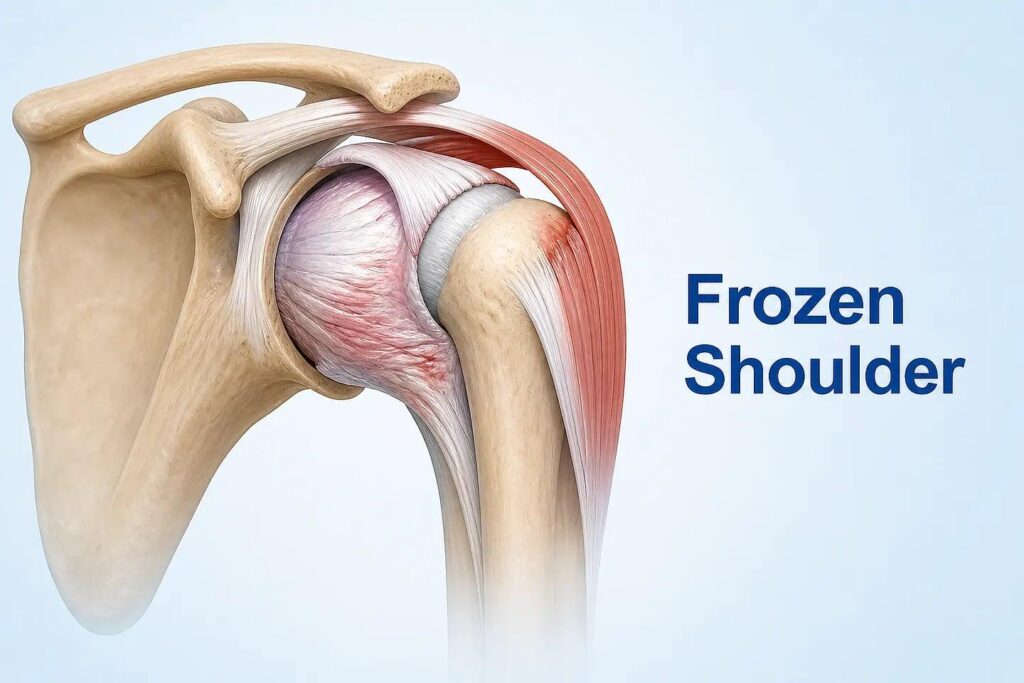
In frozen shoulder, the capsule around the joint tightens and restricts movement. A clinician compares how far you can move the arm yourself with how far it moves when they gently guide it while you relax. Both movements are typically restricted. This helps distinguish stiffness from other causes of shoulder pain; it is not a test to force at home.
How can you tell whether treatment is helping?
Choose one everyday task that matters to you, such as washing your hair. At each visit, describe what you can now do and where the movement still stops. Reaching the back of your head again is useful progress, even if your shoulder has not regained its full range.
Treatment often begins with pain relief and exercises tailored to your movement. Ask your physiotherapist which movements to practise and what to do if pain increases. Improvement can take months. Surgery is usually considered only when stiffness continues to limit daily life despite other treatment.
Preparing for a shoulder consultation in Abu Dhabi
Write down when the pain began, when you noticed stiffness, and which activity you most want to regain. Mention any injury or surgery that preceded the symptoms. These details help your clinician investigate the cause and set a practical goal for treatment.
Related Articles

Common Shoulder Pain and How to Treat It

Elbow Tendonitis: Symptoms and Treatment
